Home / News / Blog / Ideal for Non-Metallic & Metallic Material Testing Under 2000N
Ideal for Non-Metallic & Metallic Material Testing Under 2000N
Views: 0 Author: Site Editor Publish Time: 2025-11-05 Origin: Site
The universal material testing machine stands as a pivotal instrument in the field of material science and quality control. It is exceptionally versatile, suitable for testing a wide array of materials including rubber, plastic, leather, and metal. Its primary function is to evaluate key mechanical properties such as tensile strength, tear strength, elongation at break, and peel strength, making it an indispensable tool for research and development, as well as production monitoring. Specifically for rubber, it is the most widely used instrument for improving production formulas, conducting incoming material inspection, and ensuring stringent control over the quality of rubber materials. This particular series of models is engineered to handle non-metallic and metallic material testing where the test loads do not exceed 2000N, making it ideal for a broad spectrum of flexible materials.
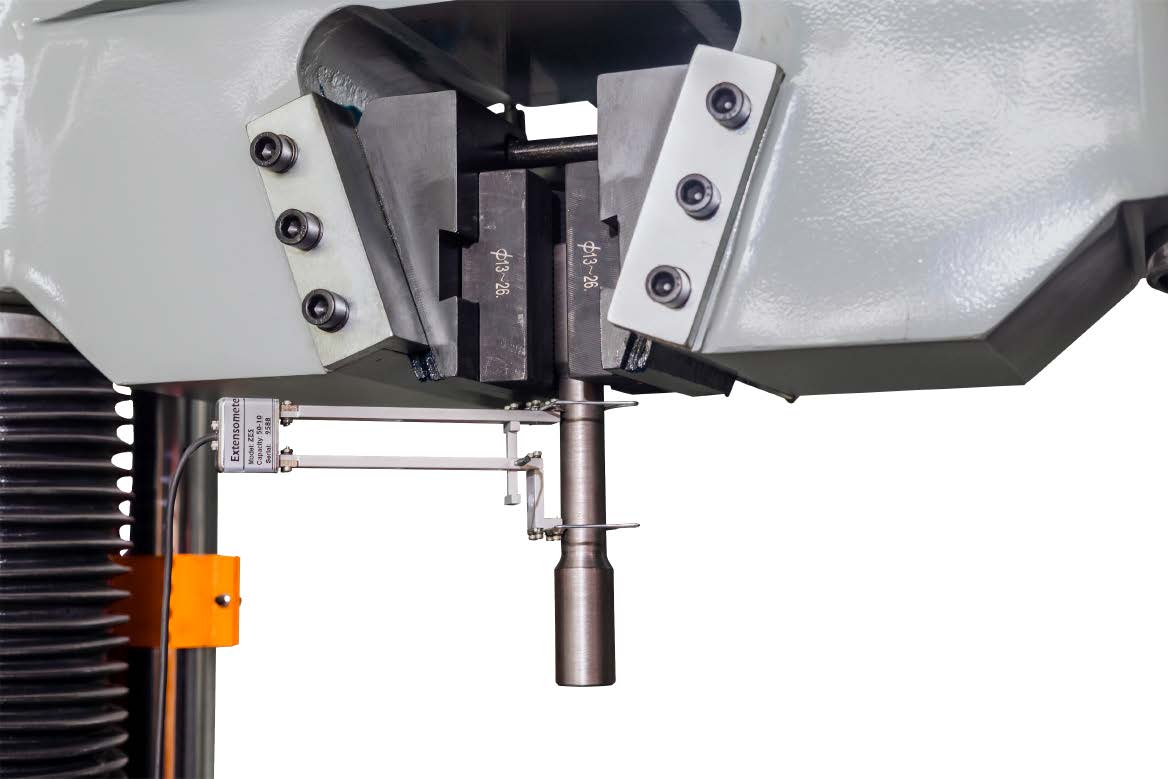
The core purpose of this servo tensile testing machine is to accurately assess the mechanical behavior of flexible materials that undergo large deformations. To this end, it is equipped with a specialized large deformation extensometer, a critical component specifically designed for the precise measurement of sample deformation under stress. This capability makes it perfectly suited for testing the mechanical properties of highly elastic materials like rubber and certain plastics, providing reliable data on how these materials stretch and ultimately fail. The integration of this advanced measurement system ensures that the data collected on elongation and deformation is both accurate and repeatable, forming the foundation for critical quality assurance decisions.
A key feature of this testing machine is its high-precision sensing system, which utilizes sensors from the world-renowned manufacturer, Weishi Quan Sensor from the United States. These sensors are celebrated for their high accuracy, excellent linearity, and remarkable long-term stability, guaranteeing consistent performance that remains reliable for decades. Complementing this is the robust power system, which employs Panasonic AC servo motors from Japan. These motors ensure exceptional synchronous accuracy in the drive system, characterized by high transmission efficiency, smooth and quiet operation, and a long, maintenance-free service life. The motion is transmitted through high-precision ball screws, driven by the imported servo motor under full digital pulse control. This sophisticated setup allows for a wide and precise range of test speeds, from 0.001 to 500mm/min, enabling it to comprehensively perform tensile, compression, and bending tests on various materials.
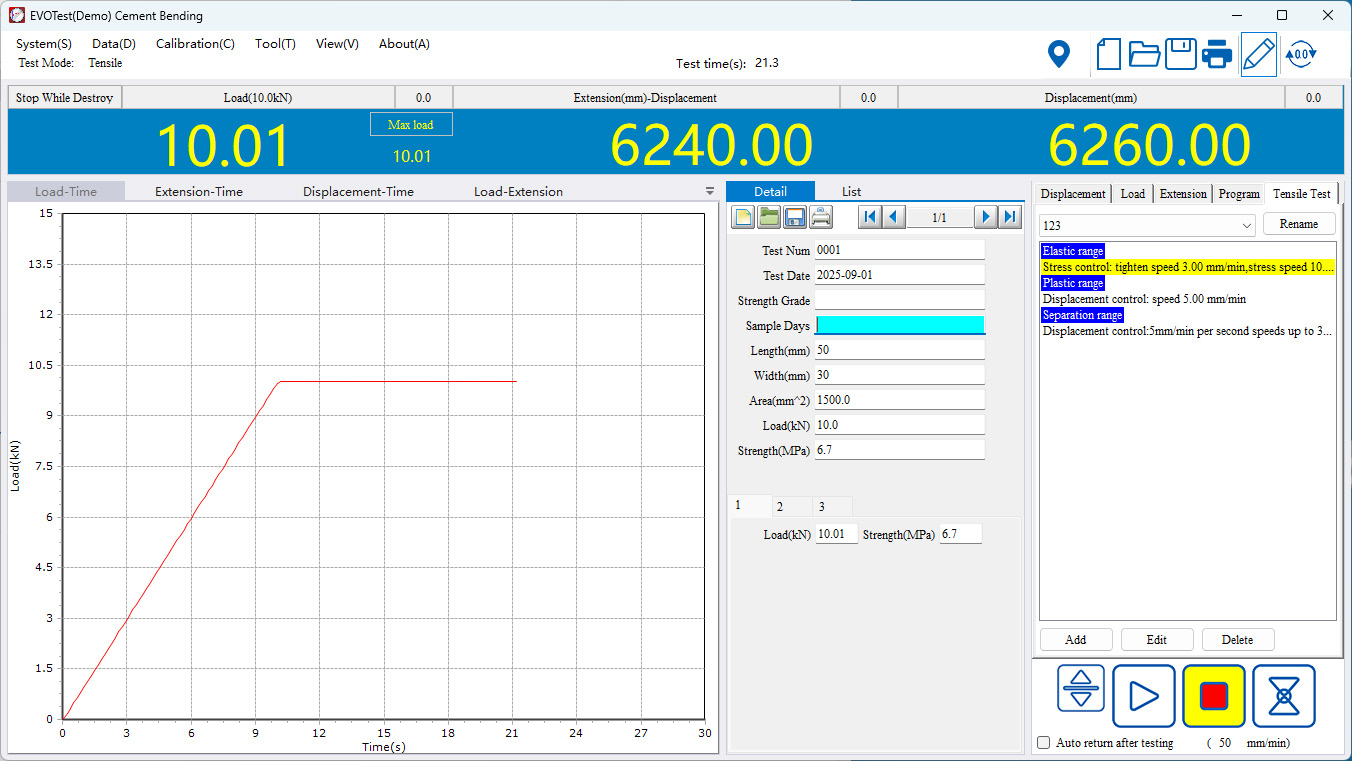
The gauge length measurement system represents a significant leap in testing efficiency and accuracy. It incorporates a high-precision large deformation extensometer measurement device, sourced from the trusted supplier Mikrosize. This device, when seamlessly matched with the constant precision M212 software provided by Measuring Testing Instrument, allows for the exact testing of the rubber gauge length, such as the standard "25mm" measurement. This advanced setup effectively replaces the traditional, cumbersome method of using a ruler for manual measurement and the subsequent complex process of manual calculation. As a result, it drastically improves work efficiency, reduces human error, and delivers superior data integrity. The collaboration between the hardware from Mikrosize and the software from Measuring Testing Instrument ensures that the entire system operates as a cohesive and highly accurate unit, meeting the demanding requirements of modern material testing laboratories. This universal material testing machine, with its robust features and precise control, remains a cornerstone for quality assurance and research in material science.