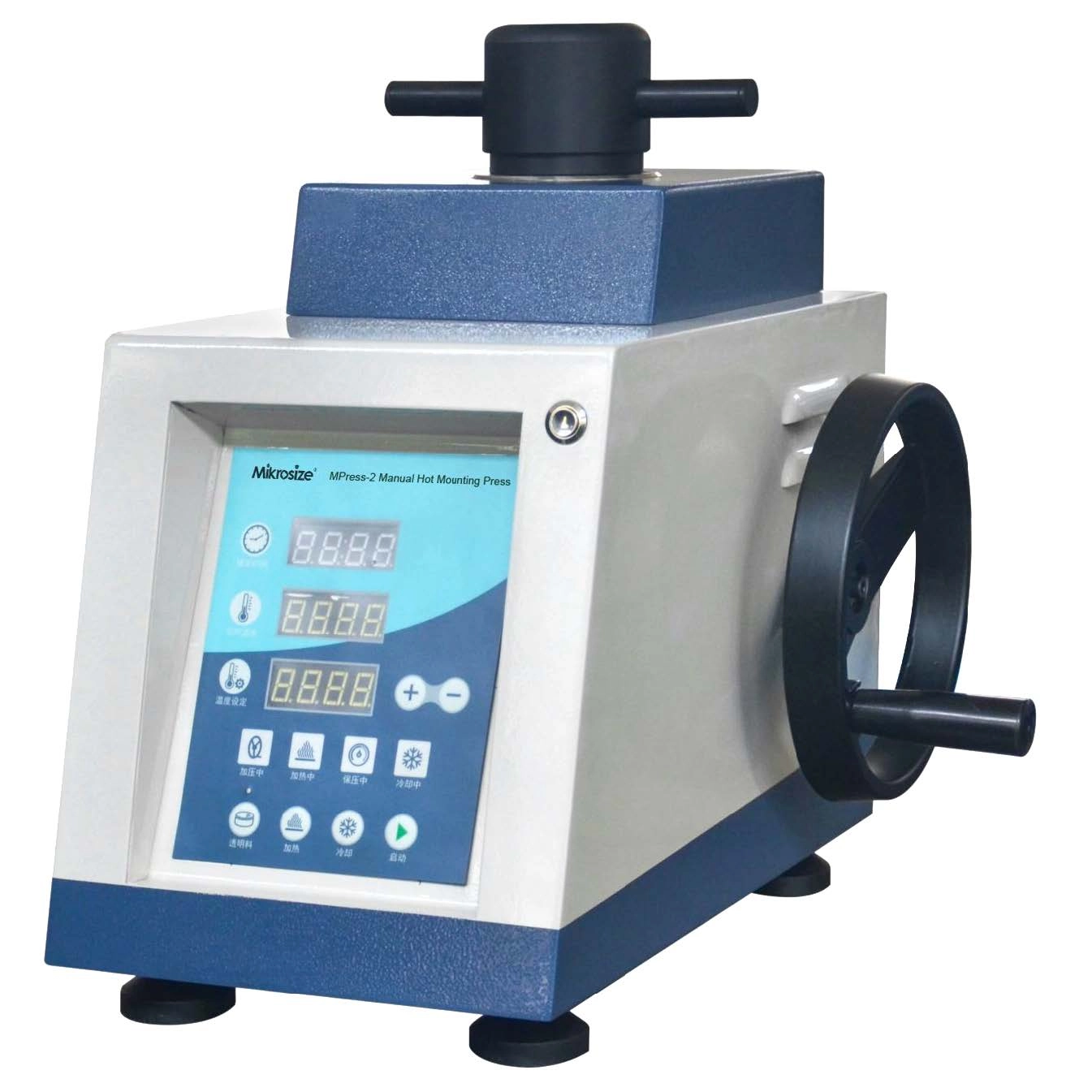
In the meticulous world of material science and industrial quality control, the preparation of metallographic specimens is a foundational step that directly influences the accuracy and reliability of subsequent analysis. Prior to any form of microscopic examination or hardness testing, a specimen must be securely mounted and prepared to reveal its true microstructure. The Fully Automatic Metallographic Specimen Embedding Machine stands as a cornerstone technology in this preparatory phase, transforming irregular, difficult-to-handle samples into perfectly consistent, polished-ready mounts. For professionals seeking unparalleled precision and efficiency in their labs, understanding the operation, benefits, and technological sophistication of these machines is paramount. As a leading supplier in the field of material analysis, Mikrosize, a trusted name in Measuring and Testing Instruments, provides cutting-edge solutions that integrate seamlessly into modern laboratory workflows.
The Core Principle: Thermal Embedding for Flawless Specimen Encapsulation
The fundamental operating principle of a fully automatic metallographic embedding machine is thermal embedding, a process that combines controlled heat and pressure to create a durable, representative mount. The procedure begins by placing the metallographic specimen—whether it's a tiny metal fragment, a coated surface, or a brittle ceramic—into a specialized mold cavity. A precise amount of thermosetting embedding material, such as phenolic resins (Bakelite powder) or transparent epoxy resins, is dispensed around the sample. Upon initiating the cycle, the machine's heating system rapidly elevates the temperature of the mold and the embedding material to a pre-set value, typically adjustable within a range of 0-200°C. This heating phase causes the embedding material to melt into a low-viscosity liquid, allowing it to flow into every crevice and fully envelop the sample, ensuring no voids or air pockets are trapped.
Concurrently, the machine's pressure system activates, applying precise and programmable pressure, often ranging from 0 to 6 MPa depending on the model and material requirements. This pressure is not merely for compaction; it serves a critical function. It forces the molten resin to intimately contact the entire surface of the specimen, eliminates residual gases, and ensures the material completely fills the mold space. This results in a dense, uniform block where the specimen is held in an unyielding grip. After a designated period of heat and pressure application to cure the resin, the cooling system engages. It rapidly reduces the mold temperature, solidifying the embedding material and locking the specimen in place within a regular-shaped block (e.g., cylindrical or rectangular). This final embedded block is easy to handle, label, and proceed with for grinding, polishing, and ultimately, precise analysis using instruments like the high-accuracy hardness testers supplied by Mikrosize.
Deconstructing the Equipment: A Symphony of Precision Engineering
The reliability of a fully automatic embedding machine lies in its integrated modules, each performing a critical function with high repeatability.
1. The Heating Module: Uncompromising Temperature Control
The heart of the embedding process is the heating module. It is composed of high-power, long-life heating elements (such as 2000W cartridge heaters) strategically arranged to surround the mold, ensuring 360-degree uniform thermal distribution. This design eliminates cold spots and significantly shortens the heating phase, boosting laboratory throughput. The true sophistication, however, lies in the temperature control system. Utilizing high-precision sensors like K-type thermocouples or RTDs (Resistance Temperature Detectors), the system provides real-time feedback to a central controller. This controller employs advanced PID (Proportional-Integral-Derivative) algorithms to dynamically adjust the heating power, achieving and maintaining the setpoint temperature with an impressive accuracy of ±1°C. This precise thermal management is crucial, as it ensures the embedding material melts at its optimal temperature, preserving its chemical properties and preventing thermal degradation that could compromise the mount's integrity.
2. The Pressure Module: The Force of Perfection
To complement the heating, the pressure module delivers controlled, consistent force. Modern machines typically employ electric-hydraulic or pneumatic systems. In a sophisticated electric-hydraulic system, a quiet and efficient motor drives a hydraulic pump to generate high-pressure oil, which in turn actuates a piston to apply pressure directly to the mold. This method provides smooth, stable, and remarkably precise pressure control across a wide range. Integrated pressure sensors continuously monitor the force being applied, creating a closed-loop control system that maintains the exact pressure specified by the program. This prevents common issues such as sample damage from excessive force or incomplete embedding from insufficient pressure, guaranteeing perfect results every time—a standard expected from premium Measuring and Testing Instruments from suppliers like Mikrosize.
3. The Cooling Module: Accelerating Laboratory Workflow
Once the curing is complete, a rapid and controlled cooldown is essential to solidify the mount and ready it for ejection. The cooling module is engineered for maximum efficiency, often featuring an automatic water-cooling system. Solenoid valves control the flow of a coolant (typically water) through a network of pipelines that are tightly affixed to the mold body. This direct-contact design accelerates heat dissipation, rapidly bringing the mold and the embedded specimen down to a safe handling temperature. High-end models, such as those offered by Mikrosize, may support an external circulating cooling water chiller. This closed-loop system not only conserves water but also provides more stable and lower temperatures, further enhancing cooling efficiency, shortening the entire cycle time, and increasing the daily sample capacity of the laboratory.
4. The Intelligent Control System: The Brain of the Operation
Orchestrating the complex interplay of heat, pressure, and cooling is an advanced control system, typically built around an industrial-grade PLC (Programmable Logic Controller) or a high-performance microcontroller. This system is paired with a user-friendly human-machine interface (HMI), usually a vibrant 7-inch or larger touchscreen. From this intuitive interface, operators can effortlessly set and adjust all critical parameters: temperature, pressure, heating time, pressure hold time, and cooling time. A standout feature of these systems is the ability to store multiple process recipes—often 99 sets or more. This allows laboratories to save optimized settings for different materials (e.g., soft aluminum, hard steel, porous ceramics) and varying sample sizes, enabling any operator to achieve expert-level results with a single touch. This level of automation and recipe management is a hallmark of modern Measuring and Testing Instruments, ensuring traceability and repeatability in quality control processes.
Why Choose a Fully Automatic System? The Compelling Advantages
Transitioning from manual or semi-automatic methods to a fully automatic metallographic embedding machine from a reputable supplier like Mikrosize offers transformative benefits for any laboratory engaged in material testing and hardness analysis.
Unmatched Consistency and Repeatability: By removing human variability from the process, these machines produce geometrically identical mounts batch after batch. This consistency is critical for obtaining comparable and reliable results in quantitative metallography and hardness testing.
Dramatically Enhanced Efficiency: Automation allows an operator to load a sample, start the cycle, and walk away. The machine handles the entire process, freeing up valuable technician time for other tasks like polishing or analysis. Multiple cycles can be run with minimal supervision, significantly increasing lab throughput.
Superior Specimen Integrity: The application of precise, programmable pressure ensures that even the most fragile, delicate, or porous specimens are embedded without damage. The complete encapsulation prevents edge rounding and preserves the true microstructure at the specimen's surface, which is essential for accurate microhardness measurements.
Improved Laboratory Safety: The process is fully enclosed, protecting operators from exposure to high temperatures, hot resins, and potential fumes. This automated handling minimizes the risk of burns and other manual-related injuries.
Seamless Integration with Hardness Testing Workflows: A perfectly embedded specimen provides a flat, stable base that is ideal for hardness testing. When paired with a Mikrosize hardness tester, laboratories can establish a complete, high-precision preparation-to-analysis pipeline, ensuring that hardness indentation readings are accurate, reproducible, and truly representative of the material's properties.
Conclusion: A Foundational Investment for Modern Metallography
The fully automatic metallographic specimen embedding machine is far more than a simple mounting press; it is a sophisticated piece of laboratory engineering that ensures the foundational step of sample preparation is executed with absolute precision and reliability. Its integration of precise thermal management, controlled pressure application, and efficient cooling, all governed by an intelligent control system, makes it an indispensable asset for any serious metallography, failure analysis, or quality control laboratory. For those seeking to enhance their capabilities in material testing, investing in a high-quality embedding machine from a proven supplier like Mikrosize is a strategic decision. It elevates the standard of sample preparation, directly contributing to the integrity of data generated by advanced Measuring and Testing Instruments, and ultimately, to the quality and success of your products and research.


