Home / News / Blog / Cylindricity vs Roundness: How to Choose the Right Form Measurement Instrument
Cylindricity vs Roundness: How to Choose the Right Form Measurement Instrument
Views: 0 Author: Site Editor Publish Time: 2026-03-25 Origin: Site
Understanding the Differences Between a Cylindricity Meter and a Roundness Meter: Insights from Mikrosize, a Trusted Supplier of Measuring & Testing Instruments
In precision manufacturing, selecting the right form measurement instrument is essential for ensuring quality. Two commonly used devices are the cylindricity meter and the roundness meter. While both evaluate rotational parts, they serve different purposes. At Mikrosize, a trusted supplier of high-precision Measuring & Testing Instruments, we provide solutions ranging from hardness testers and vision measuring machines to microscopes and metallographic equipment. Understanding the distinction between a cylindricity meter and a roundness meter helps you make an informed choice for your quality control needs.
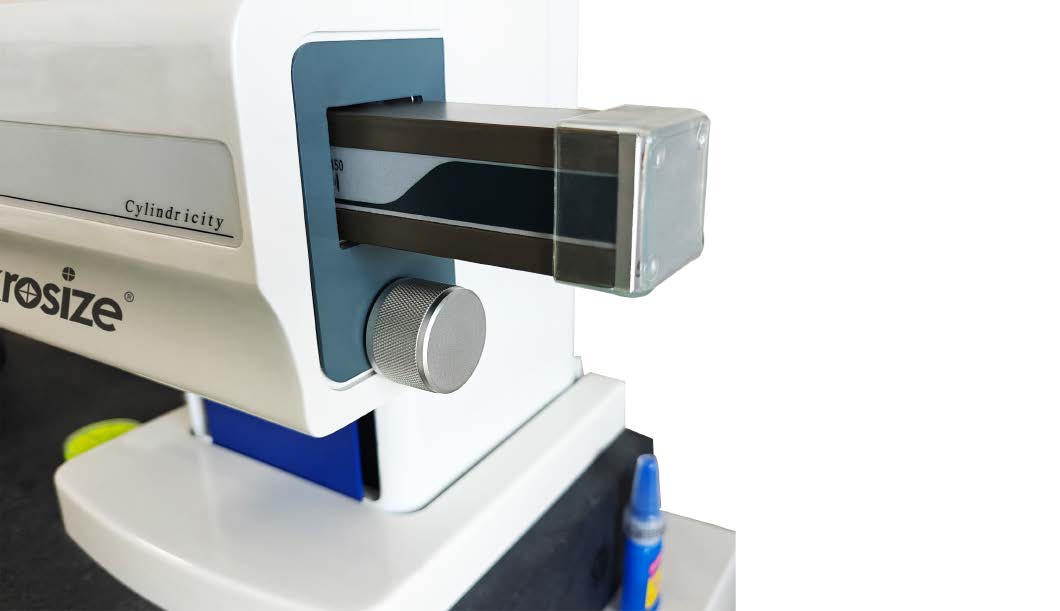
A cylindricity meter is designed for comprehensive three-dimensional evaluation of cylindrical surfaces. It measures the overall shape error of a cylinder, including cylindricity, straightness of surface lines, straightness of the axis, taper, and barrel-shaped deviations. By scanning the entire cylindrical surface—combining rotational movement with axial travel—it collects data from multiple cross-sections and generates a holistic view of the part’s form accuracy. This makes it ideal for complex components such as hydraulic pistons, engine cylinders, and precision shafts, where overall geometric integrity is critical. As a Mikrosize supplier of advanced Measuring & Testing Instruments, we offer cylindricity meters that deliver the comprehensive analysis needed for demanding applications.
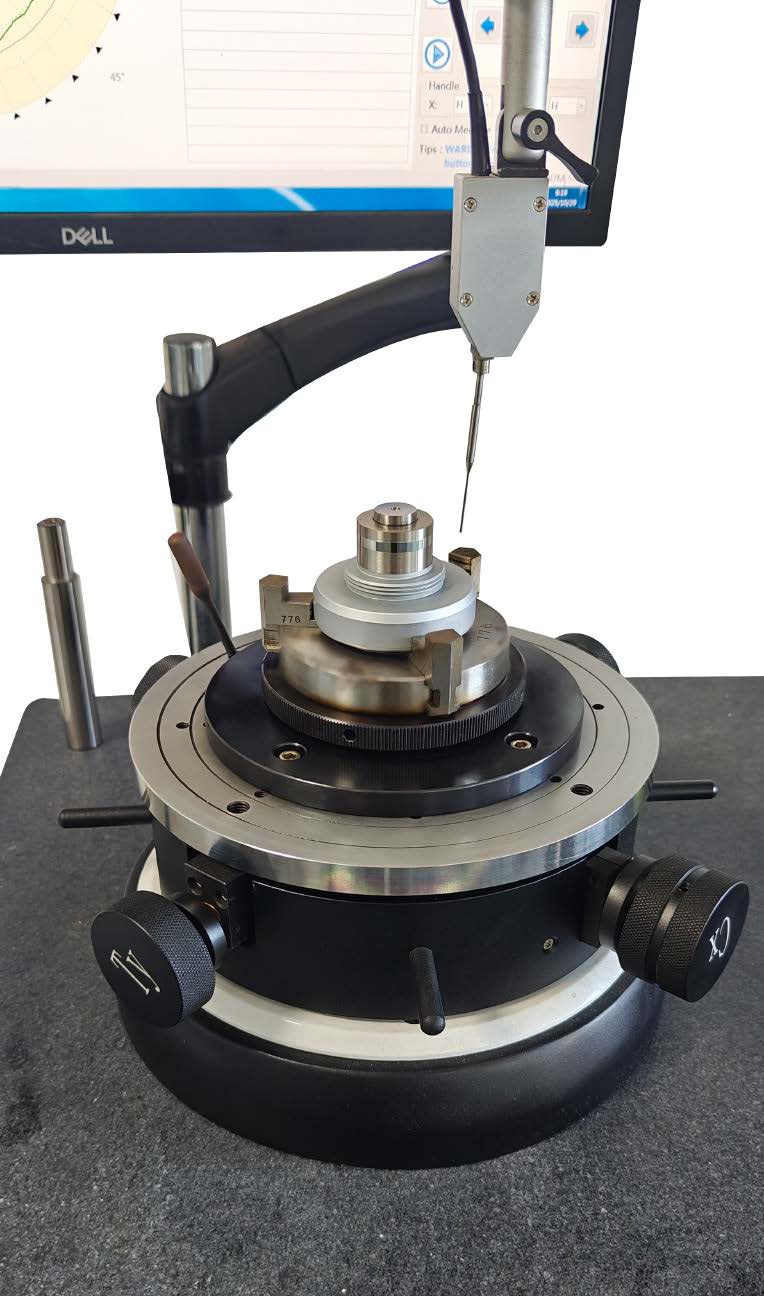
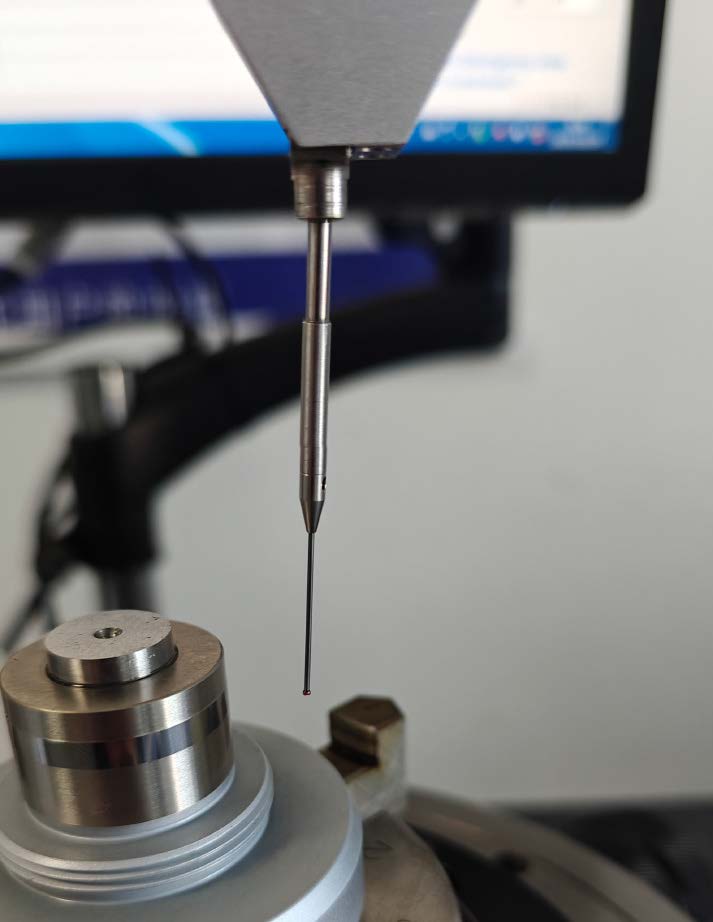
A roundness meter, in contrast, focuses on two-dimensional circular cross-sections. Its primary function is to measure roundness error, concentricity, coaxiality, and circular runout at specific planes. The workpiece is rotated on a precision spindle while a stylus records radial variations, quantifying how closely a single cross-section conforms to a perfect circle. While it can measure multiple sections sequentially, it does not integrate axial data into a full 3D evaluation. Roundness meters are highly efficient for applications such as bearing races, seal grooves, or any part where only the roundness of individual circles needs to be verified. For high-volume production requiring fast, single-plane inspection, a roundness meter often meets requirements with excellent accuracy and speed.
The key difference lies in dimensionality and scope. A cylindricity meter is built for measuring complex shapes such as cylindrical surfaces, reflecting overall shape characteristics like axis straightness and surface uniformity. It provides a complete picture of the cylinder’s form. A roundness meter, however, focuses on the precise measurement of individual circular cross-sections, concentrating on shape indicators within a single plane. Therefore, if your goal is to evaluate the overall shape accuracy of a cylindrical surface—considering variations along the entire length—a cylindricity meter is the better choice. If you only need to assess roundness at specific circular cross-sections, a roundness meter can meet your requirements efficiently.
In practice, instrument selection depends on specific measurement needs. For critical automotive, aerospace, or medical components, cylindricity is often vital because a perfectly round but tapered journal can lead to premature failure. In such cases, a cylindricity meter provides the necessary control. For simpler parts like washers or gaskets, roundness measurement alone is sufficient. At Mikrosize, we help clients navigate these choices. As a dedicated supplier of Measuring & Testing Instruments, we offer both types of equipment, backed by comprehensive support including calibration, software integration, and after-sales service. Our expertise extends to integrating these instruments with our hardness testers, vision systems, microscopes, and metallographic equipment to create complete quality assurance workflows.
Modern cylindricity meters often incorporate roundness measurement capabilities, while dedicated roundness meters may provide higher rotational accuracy and faster cycle times for pure roundness tasks. Choosing the right partner ensures you get the best solution for your application. With Mikrosize, you gain a partner committed to precision and reliability in Measuring & Testing Instrument technology.
In summary, the cylindricity meter is indispensable for full evaluation of cylindrical surfaces, providing comprehensive shape information across the entire feature. The roundness meter excels at precise measurement of circular cross-sections, focusing on roundness, concentricity, and coaxiality at discrete planes. Both play critical roles in quality control, and understanding their differences allows manufacturers to optimize inspection processes and product quality.
For more information about our range of Measuring & Testing Instruments—including cylindricity meters, roundness meters, hardness testers, vision measuring machines, microscopes, and metallographic equipment—contact your local Mikrosize supplier today. Let us help you achieve the highest standards of geometric accuracy and manufacturing excellence.